

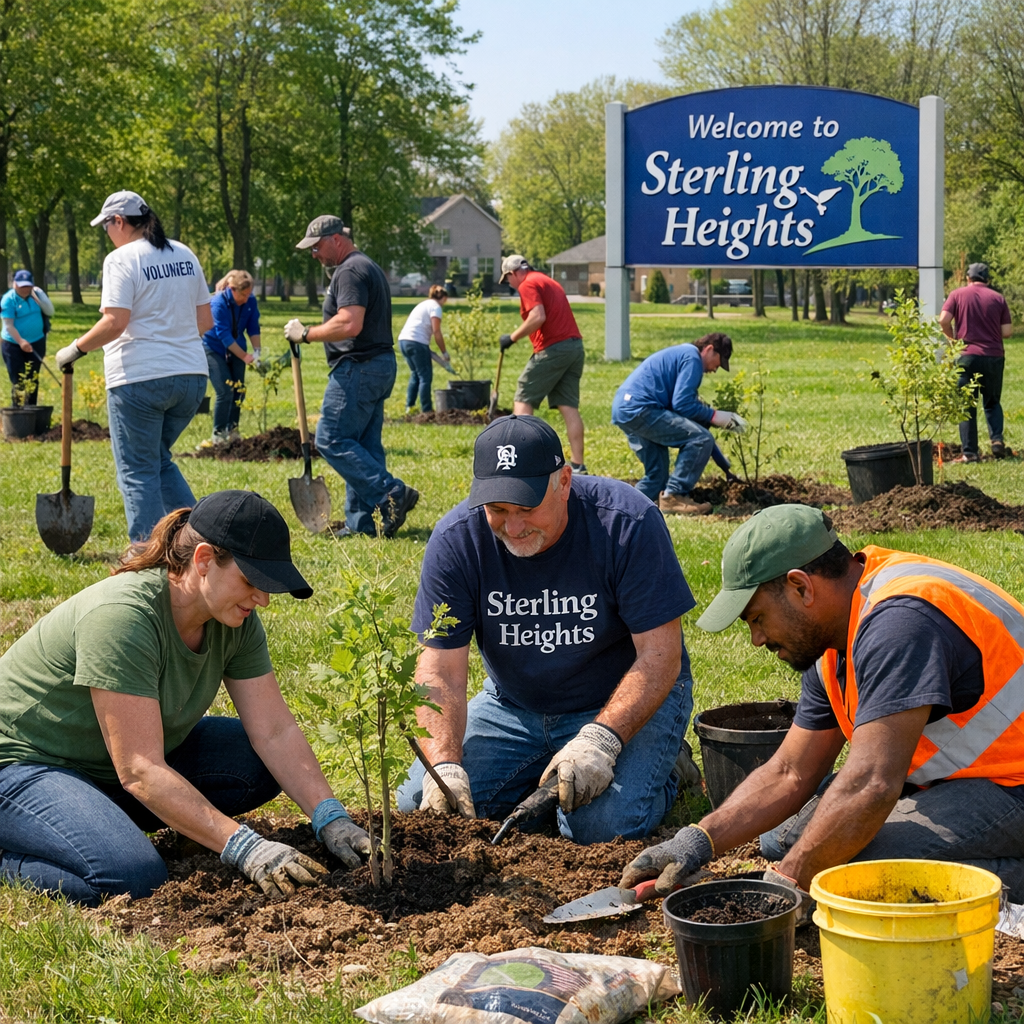
Sterling Heights is actively implementing initiatives to enhance environmental sustainability and combat climate change. The city’s comprehensive approach includes the adoption of a Climate Action Plan, reforestation efforts, and green infrastructure projects.
Climate Action Plan
In February 2025, the Sterling Heights City Council approved the city’s first-ever Climate Action Plan (CAP). This strategic document aims to reduce greenhouse gas emissions and increase climate resilience. The CAP aligns with Michigan’s MI Healthy Climate Plan, targeting net-zero emissions by 2050. Key focus areas include buildings, transportation, waste management, natural resources, and public health. The plan emphasizes energy efficiency, green infrastructure, expanded public transportation, and waste reduction. Community input has been integral, shaping initiatives such as tree canopy expansion and renewable energy adoption.
Reforestation Initiatives
To enhance the urban tree canopy, Sterling Heights has launched reforestation initiatives funded by the Pathway to Play and Preservation millage. These efforts aim to create tree-lined streets, provide natural air conditioning, and beautify neighborhoods. The Inspiring Green Program further educates and inspires the planting and care of community trees, roadways, and green spaces, encouraging local businesses, organizations, and residents to participate in sustainability efforts.
Green Infrastructure Projects
In May 2026, construction began on a nearly $1 million green infrastructure project designed to filter stormwater, reduce pollution, and extend a recreational trail in Sterling Heights. The project focuses on redesigning and retrofitting the Sterling Relief Drain corridor, creating 42 acres of restored habitat with native vegetation to slow and filter stormwater runoff. Environmental upgrades include planting over 2,500 trees and shrubs, 8,000 native perennial pollinator plugs, and more than 200 pounds of native and pollinator seeds.
Community Engagement
The city encourages residents to participate in sustainability initiatives through programs like the SHINE Program, which organizes community clean-up events, and the Community Garden at James C. Nelson Park, offering opportunities to engage in sustainable practices and connect with the community. These collective efforts aim to create a cleaner, healthier, and more resilient community for future generations.