

Sterling Heights, Michigan, experiences a humid continental climate characterized by warm summers and cold winters. Average high temperatures range from 32°F (0°C) in January to 83°F (28°C) in July, while lows vary from 19°F (-7°C) in January to 66°F (19°C) in July. Annual precipitation averages around 33.84 inches (860 mm), with May typically being the wettest month. Snowfall is common during winter months, contributing to the city’s distinct seasonal changes.
In response to these climatic conditions and the broader challenges of climate change, Sterling Heights has implemented several environmental initiatives. The city adopted its first-ever Climate Action Plan (CAP) in February 2025, aiming to achieve net-zero greenhouse gas emissions by 2050. The CAP focuses on key areas such as buildings, transportation, waste, natural resources, and public health, with strategies designed to reduce emissions and enhance climate resilience.
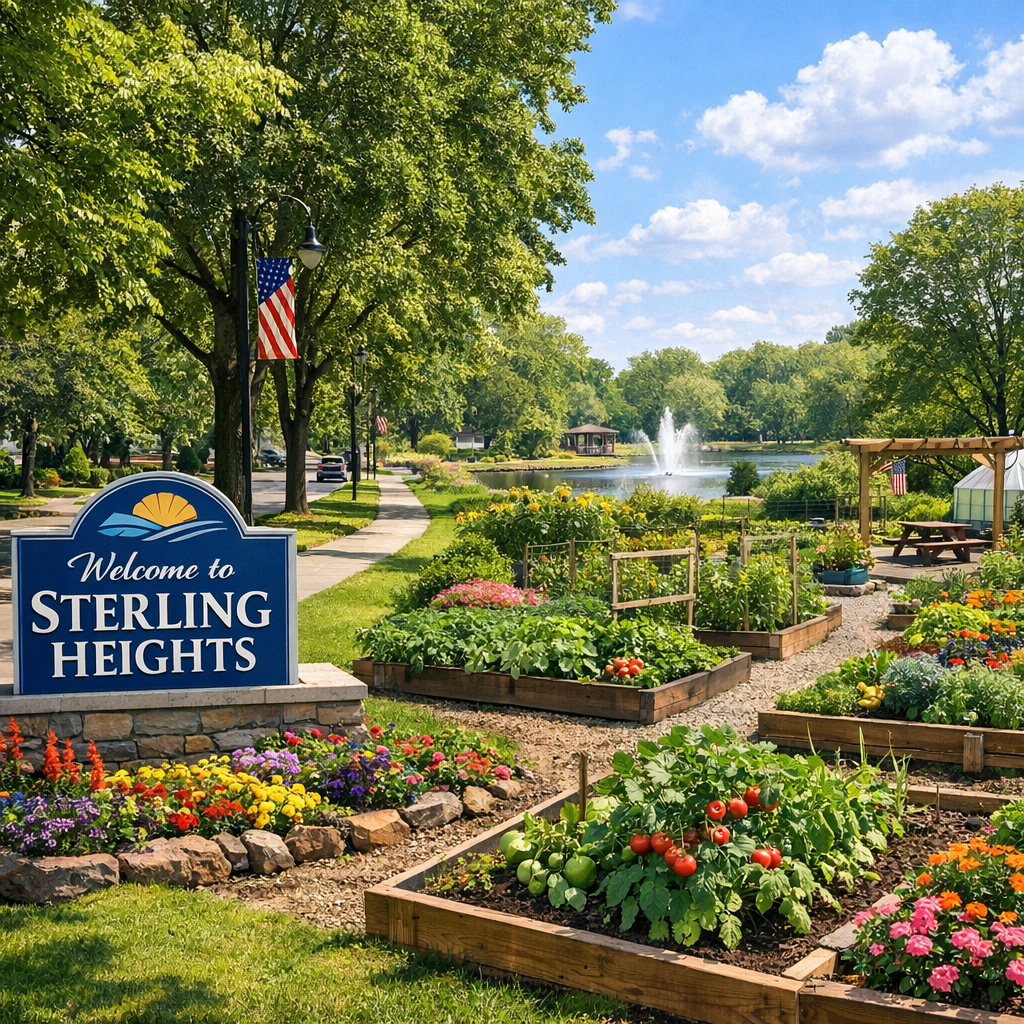
Complementing the CAP, the ‘Think Sterling Green’ campaign encourages community participation in sustainability efforts. This includes reforestation projects to restore the city’s tree canopy, the establishment of community gardens, and the promotion of green infrastructure. Additionally, the Pathway to Play and Preservation project focuses on creating and maintaining pathways, preserving open spaces, and enhancing parks to improve residents’ quality of life.
These initiatives reflect Sterling Heights’ commitment to fostering a sustainable and resilient community, ensuring that the city remains a vibrant place to live for future generations.